Letter to Future Self: What to Write and How to Send It
Write the letter as the person who does not know yet where the year will go. Put in the one question you cannot answer, what is actually hard right now, who is around you, and one ordinary day hour by hour, because the ordinary is what you will forget first. Add three lines back from your future self. Then pick a date a year out and send it with FutureMe, a scheduled email to yourself, or a sealed envelope. The letter is good later precisely because you did not know.
What do you write in a letter to your future self?
Most guides hand you a template: a paragraph each on career, money, relationships and health, with goals for each. That works if you have goals. If what you have is a lot of maybes, the template produces a letter you would not want to receive, a confident stranger listing plans. The better letter is a record of not knowing, which is the one thing future you will have lost: by the time it arrives you will have the answers and have forgotten the questions were ever open.
Start it "Dear future me," then today's date and where you are sitting. After that, six things.
1. Ask the one thing you can't know yet. So, did we stay? Did you take it? Is it still the same flat? Write it as a question and leave it open. Future you reads it holding the answer, and that moment is most of what the letter is for.
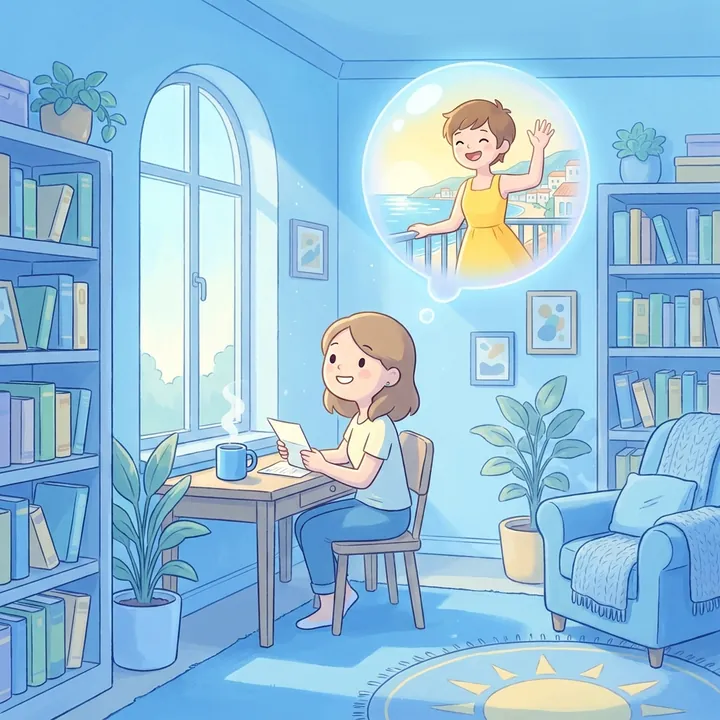
2. Say what is hard right now, honestly. Not the brave version you give at dinner. It feels like complaining while you write it, but it is the line that shows the distance later. "Things are fine, a bit busy" shows nothing.
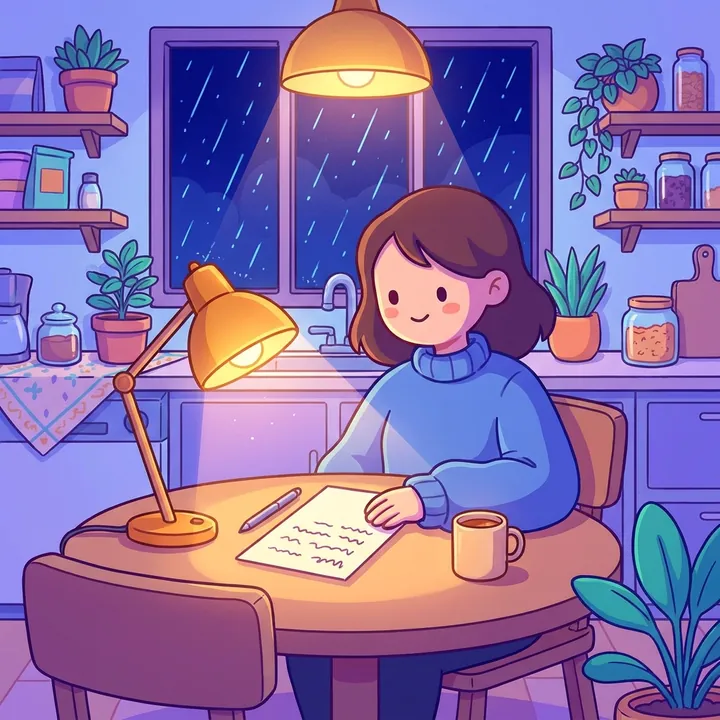
3. Tell a secret. Something you have never said out loud. Your future self is the safest person to tell: already knows, cannot repeat it, and has probably stopped minding.
4. Write down who is around you, and how they are. Your grandmother's hip. The friend you see every Thursday. The dog's age. People move in and out of a year without announcing it, and this is the paragraph most likely to make future you pick up the phone.
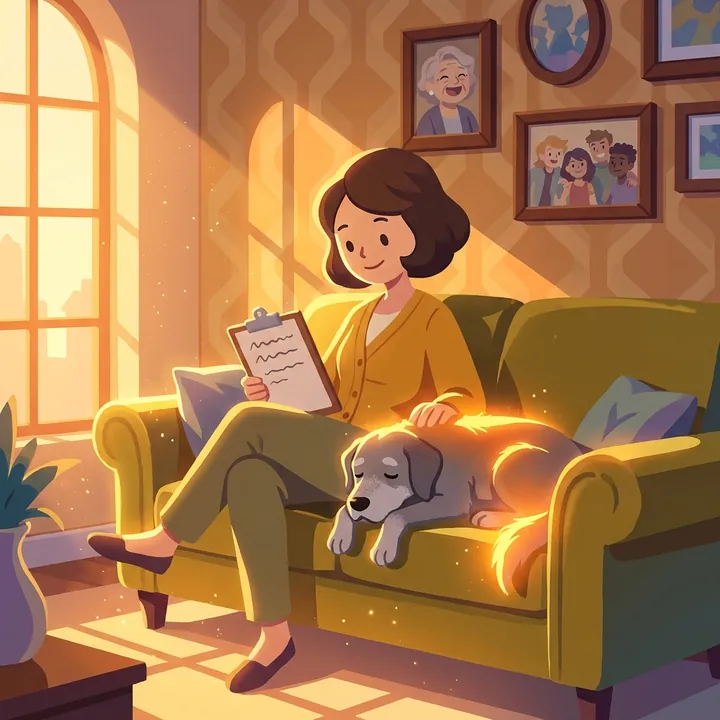
5. Put down one thing you are sure of. Future you may disagree. A disagreement with yourself across a year is one of the few ways to actually watch your mind change.
6. Give your future self permission to change its mind. About the plan, the person, the city, and about this letter. A letter that holds you to something turns into a guilt trip. A letter that lets you off is one you will want to open.
What small things should you write down for your future self?
The big things you will remember anyway. What fades is the texture of the year. In 2014, Ting Zhang and colleagues at Harvard Business School had students build time capsules at the start of summer: the songs they were playing, a passage from a paper they had just written, thoughts on a recent social event, a photo. They guessed how curious they would be to open it. At the end of summer they were far more curious than they had predicted, and enjoyed it more. In a second study, people wrote up a recent conversation and got it back seven months later: the more ordinary it had seemed at the time, the more they had underestimated how much they would like having it back. We skip the ordinary because we assume we will remember it, and then we want it back. So give the second half of the letter to the boring parts.
7. A regular Tuesday, hour by hour. What time the alarm goes, what you eat, the route to work, who you text at lunch, what is on at night. The boring days fade first.
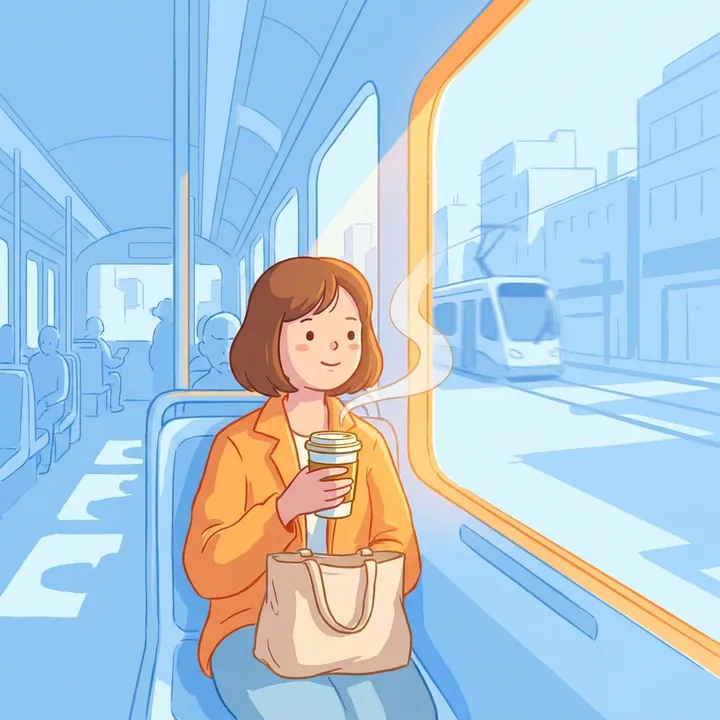
8. The song on repeat, and where it found you. You will still have the song. What gets lost is the evening it arrived.
9. What someone said that stuck with you, in their exact words. Paraphrased, it becomes yours. Exact, it stays theirs.
10. Your usual order and what it costs. The price is the fun part. It dates the letter better than the date does.
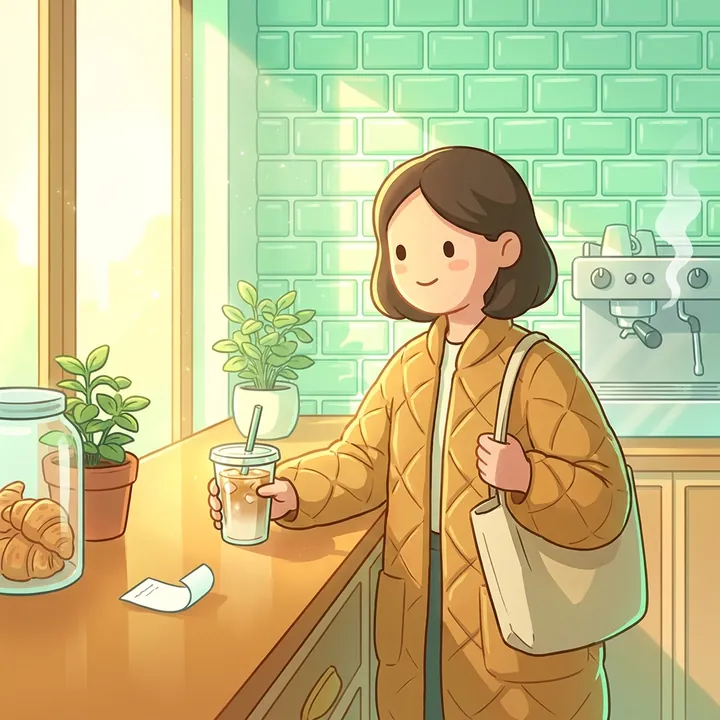
11. What you see from your window right now. You will not live here forever, and nobody photographs the view they see every day.
A letter once a year keeps one ordinary day out of fifty-two weeks. If you want more of them kept, Cave does it as a side effect of talking: every week you have chatted with Flamy gets painted into an illustrated highlight, so the plain weeks are kept without anyone deciding they were worth it.
Should you write a reply from your future self?
Yes, the same evening, before you seal anything. Three or four lines, written as the person who has been through the year: dear past me, yes, it worked out, though not the way you think. You do not know that. Writing it anyway is the exercise.
It is also the part with the best evidence behind it. Yuta Chishima and Anne Wilson ran this with high school students in Japan. Everyone wrote to themselves three years ahead, and half also wrote the reply as that future self. Only the students who wrote both came away feeling more connected to their future self, and a month later they were planning their careers more seriously and more willing to study when they did not feel like it. The letter-only group showed no change. The authors' conclusion was that getting a reply may be essential. For someone who does not know what they want, that is good news: the reply does not have to know either. It only has to be kind about the question.
How do you send a letter to your future self?
Three ways actually work, and they differ mainly in how hard it is to cheat.
| How | What it involves | The catch |
|---|---|---|
| FutureMe | Write at futureme.org, pick a date (presets from six months to ten years, or any day on the calendar), confirm your email. The letter arrives in your inbox that day. Private, or public but anonymous. | It depends on the email address still being yours. Images and files need the paid tier. |
| A scheduled email to yourself | Gmail: Schedule send, then pick a date. Apple Mail on iPhone: hold Send, then Send Later. The message waits in a Scheduled or Send Later folder until then. | The folder is one tap away, so it is sealed by willpower only. Apple Mail needs the device online on the day. |
| A sealed envelope | Write it by hand, seal it, write the open date on the front, keep it with the things you would never throw out, and put the date in your calendar. | You have to not lose it and not open it. Good for a year or two, not for ten. |
Whichever way it goes out, write it by hand first if you can, even if it is messy. Your handwriting reaches future you before the words do: the slant, the pen giving out, the word crossed out and rewritten. Photograph the page afterwards if the letter is leaving as an email.
How far ahead? One year for the first letter. It is long enough to be surprised by and short enough that the email address, the flat and most of the people still hold. Save five or ten years for a birthday or a big change, and keep a copy in two places.
What does reading a letter to your future self actually do?
The envelope or the email arrives, and you read the question first, with the answer in your hand. Then the rest lands in a different order than you wrote it. The hard part has usually either shrunk or turned out to be the start of something, and the sure thing is often wrong. The worry you spent that month on did not happen, and you had forgotten you ever had it. And the lines that hit hardest are the small ones: the coffee price, the song, the sentence in your friend's exact words. Zhang's students were surprised by this too, and so will you be, however many times you are told.
Then do two things while it is still in your hand. Read it with a pen and mark what changed. And write the next one that day, so the record has no gap. If the date you picked is New Year's Eve, the letter does the job of the before page in a winter arc, and your resolutions come from a year of evidence instead of the mood of the night.
A letter catches one evening a year. Most of the figuring out happens on the nights in between, when something is heavy and you need to say it to someone, and nothing keeps those. That is what Cave is for. You talk to Flamy, a small flame you chat with or call, more a friend than an assistant: it takes the vent, asks the next question, and can mention that this came up in March too, which is usually when a vent turns into progress. Some nights are for sorting something out, some are just for saying it, and Flamy is fine with either. What you tell it becomes memory sorted by topic that you can open and read, so next November you can see what this November's you thought about work, or about one person, without having planned to. Go quiet for a few days and it may send a short check-in. It does not deliver letters on a date; it keeps the thinking between them. And if you want to write between letters too, journal prompts has 25 that work.
FAQ
What do you write in a letter to your future self?
The question you cannot answer yet, what is hard right now said honestly, a secret, who is around you and how they are, one thing you are sure of, and permission to change your mind. Then the small things that fade: a regular day hour by hour, the song on repeat, what someone said in their exact words, your usual order and its price, the view from your window. Goals are optional.
How do you send a letter to your future self?
Three ways work. FutureMe: write on the site, pick a date, and it emails you the letter that day. A scheduled email to yourself in Gmail (Schedule send) or Apple Mail (Send Later), which waits in a folder until the date. Or a sealed envelope with the open date on the front and a reminder in your calendar. Only FutureMe keeps the letter out of your reach until the day.
How do you start a letter to your future self?
"Dear future me," then today's date and where you are sitting. Then the one question you cannot answer yet, written as a question. Do not start with goals. The person reading it already has the answer and will have forgotten the question was ever open, and that is the moment the letter exists for.
Is there an app that keeps what you think between letters?
Cave does. You talk to Flamy, a small flame you chat with or call, and what you say becomes memory sorted by topic that you can open and read, so what you thought about work last November sits next to what you think now, without having planned to write it down. Each week becomes an illustrated highlight. It does not deliver letters on a date, and your memory is never used to train AI models.